

Companies should keep a human eye on due diligence
by Kylene Casanova
Despite a range of services available for due diligence, corporates shouldn't underestimate the value of human judgement in the fight against corruption, fraud and money-laundering.
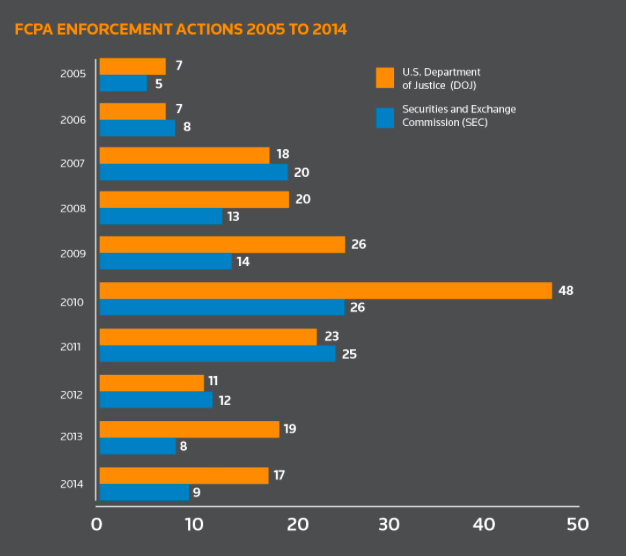
In light of the high-profile organisations and financial institutions being ordered to pay huge fines for non-compliance on customer due-diligence regulations (see graph below of FCPA enforcements in the past decade), there is a pressing need for companies to “go beyond a tick-box approach” when it comes to customer and third-party due diligence, according to James Swenson, an anti-money laundering and due diligence expert at Thomson Reuters.
Companies and their executives can be held personally accountable for transactions that facilitate money laundering, corruption and fraud – and it may not always be intentional. As Swenson says: “There is a high possibility of unknowingly becoming involved in financial crimes like fraud or breaching sanctions.”
Companies need to be investing adequately, in terms of time and resources, into research about their customers, suppliers, banking partners and all other third parties in their supply chain, argues Swenson. Of course, Thomson Reuters offers a range of enhanced due diligence, screening and monitoring services to help companies track third-party risks. In particular, he says companies should focus on third parties in high-risk jurisdictions or in high-risk industries (naming oil and gas or pharmaceuticals).
When it comes to enhancing their due diligence capabilities, organisations now have a considerable range of services and products to choose from, which can help them with due diligence and know-your-customer compliance. These range from databases and lists to monitoring services, screening processes and country risk checks. However, it's an important point that, despite the amount of data available to companies, we should not underestimate the importance of human judgement in the due diligence process. Having a human researcher to interpret and analyse data will remain invaluable to companies in their fight against fraud from third-parties in future. As Swenson concludes: “As technological improvements allow for development of better tools to facilitate research, the human element cannot and should not be underestimated as a necessary component in the due diligence process.”
Like this item? Get our Weekly Update newsletter. Subscribe today