

Electronic systems reducing hours spent on global tax compliance
by Kylene Casanova
A report by the World Bank Group and PwC has found that, globally, governments are making progress in simplifying and reducing the burden of tax compliance on businesses. However, in some countries, complying with post-filing processes for value-added tax (VAT) and corporate income tax (CIT) returns could be some of the most challenging and lengthy processes for businesses to comply with. This is according to the Paying Taxes 2017 report.
The report found that, overall, the total tax rate decreased by 0.1 percentage points to 40.6 per cent; time to comply declined by eight hours to 251 hours; and the number of payments by 0.8 to 25 payments. It also found that lengthy filing processes in some countries are causing cash flow and administrative delays for companies of more than one year.
Differing approaches to VAT and CIT
“Until now there has been little information around the cost of post-filing procedures,” said the World Bank Group's Augusto Lopez-Claros. “The new post-filing index has shown that there are considerable variations around the world in how tax authorities approach VAT refunds and corporate income tax audits. We hope that the new data will allow governments to better understand the impact that these procedures have on businesses and will help encourage them to reform and enhance them to make it easier for companies to do business. ”
E-tax systems are main reform
The Paying Taxes 2017 report looked at how corporate tax is paid by a medium-sized company in 190 countries economies. The most common feature of tax reforms globally in the past year was the introduction or enhancement of electronic systems for filing and paying taxes, with 26 governments implementing such changes. Jamaica was the top reformer, reducing the number of payments by 26 to 11.
The report also found that it typically takes less time to comply with a VAT refund in high income economies (almost 8 hours) than in low income economies (almost 27 hours). A VAT refund triggers an audit in 70% of economies, of which over half (58%) will go through a comprehensive audit.
Tax mistakes cost time
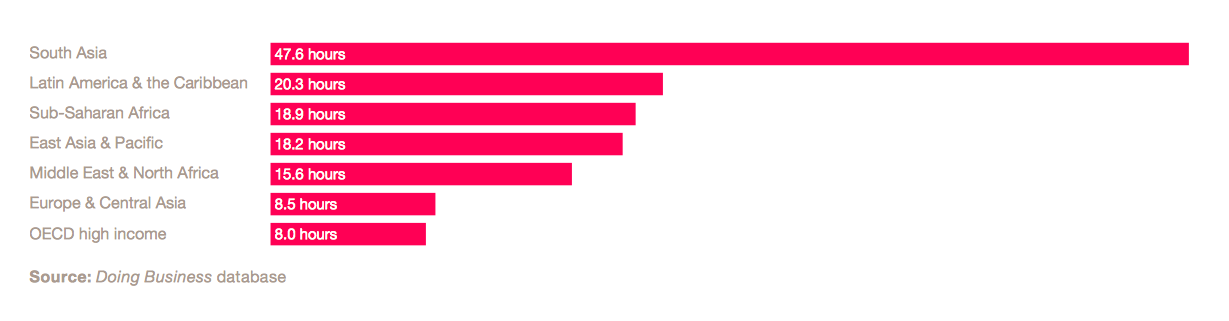
The report – available here – also found that the time it take to correct an income tax return is easiest in OECD high-income economies, followed closely by Europe & Central Asia economies, see graph below.
Like this item? Get our Weekly Update newsletter. Subscribe today