

Top three Brexit concerns for UK business
by Bija Knowles
About half of companies (49 per cent) say their business has already been negatively affected by Brexit, two years on from the UK's referendum vote to leave the EU. This compares with 29 per cent who said that Brexit would have a positive impact on their business in a year’s time.
The top three Brexit-related problems for businesses, according to a survey of 500 key UK decision-makers by Elements Global Services, were:
- ensuring trade with EU countries (56 per cent);
- a negative impact on the economy and consumer demand (36 per cent); and
- the declining value of the pound (29 per cent).
However, the survey also found that two-thirds of UK companies are planning to expand globally in the next three years – and 82 per cent say Europe is the most strategically important target region for expansion.
Poorer households will suffer most
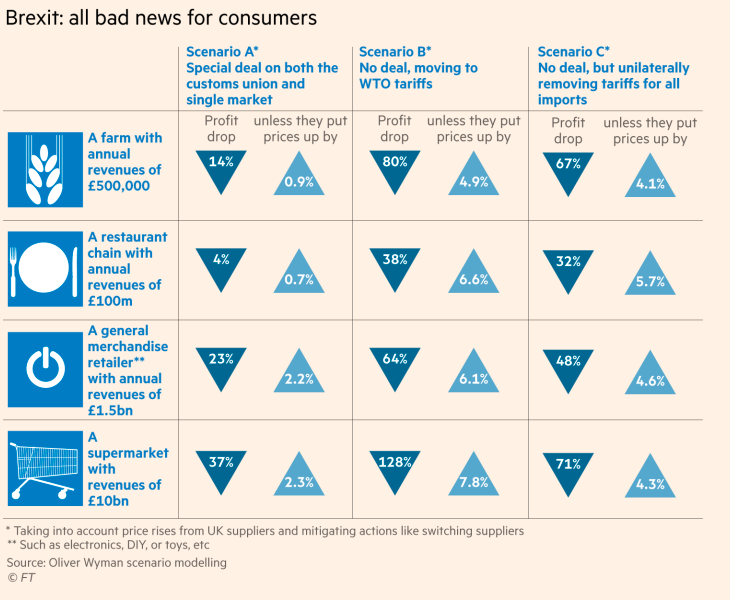
Research by Oliver Wyman suggests that UK consumer/household spending will indeed be under increased pressure once the UK leaves the EU. The firm's latest study on the subject estimates that the costs of a no-deal Brexit to UK households could amount to £1,000 extra a year per household, with the impact disproportionately felt by poorer households. The total cost to households would be in the region of £27 billion a year, with a consequent fall in profitability for consumer businesses in the UK.
Oliver Wyman's Duncan Brewer told the Financial Times: “In a scenario where the UK reverted to WTO most-favoured-nation import tariffs, we expect the price of a typical weekly grocery shop to go up by £5.50, a family meal for four at a high street restaurant chain to increase by £9, and a pair of trainers to cost £6.75 more.”
The research (Costs Up, Prices Up: Brexit’s Impact on Consumer Businesses and Their Customers), published tomorrow, 27 June, looks at the impact of costs from tariffs, red tape (non-tariff barriers), and labour flow into the supply chain and lower profits, even when companies take mitigating actions like putting up prices.
Impact on consumer businesses
The following figures published in the FT, based on statistics produced by the Oliver Wyman research, suggest that there is really no good news for UK consumer businesses following March 2019:
Like this item? Get our Weekly Update newsletter. Subscribe today
At last real trade has got to the top of the agenda in Brexit world. We at the ACT have said since the vote that obsessing over financial services is a secondary argument to the practicalities of trade. We can all argue over the numbers, but given the UK accounts for only 10% of EU trade, the bargaining hand lies over the channel.